
The results of our employee surveys show that employees in many organizations and suffer from a high workload. Work pressure that can turn into burn-out symptoms.
First and foremost, of course, this is very unpleasant for the affected employee, because the symptoms are long-lasting and all-consuming. Employees are tired, easily irritated and drop out. According to the National Survey of Working Conditions, about half of work-related absenteeism is caused by "work pressure" or by "problems with supervisors.
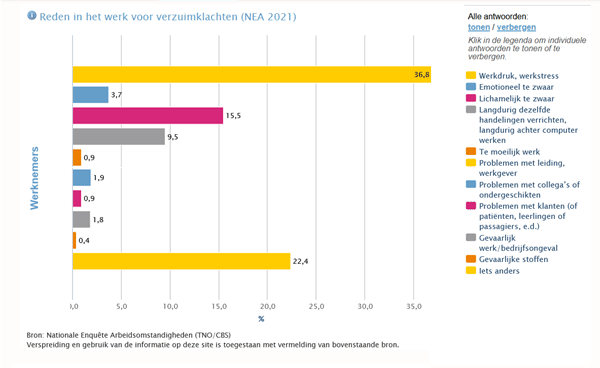
In addition to the negative consequences for the employee, burnout symptoms also have a huge impact on the organization. As an organization, you cannot afford to have employees drop out due to work-related complaints. Especially not now with the current shortage in the labor market. That makes the problem even bigger. An employee with burnout symptoms, who is easily irritated or absent, can also negatively affect the work atmosphere and contribute to dissatisfied customers. Thus, things go from bad to worse. This costs the company on all sides. Timely detection of whether an employee is at risk of burnout is therefore important for both the well-being of the employee and the organization.
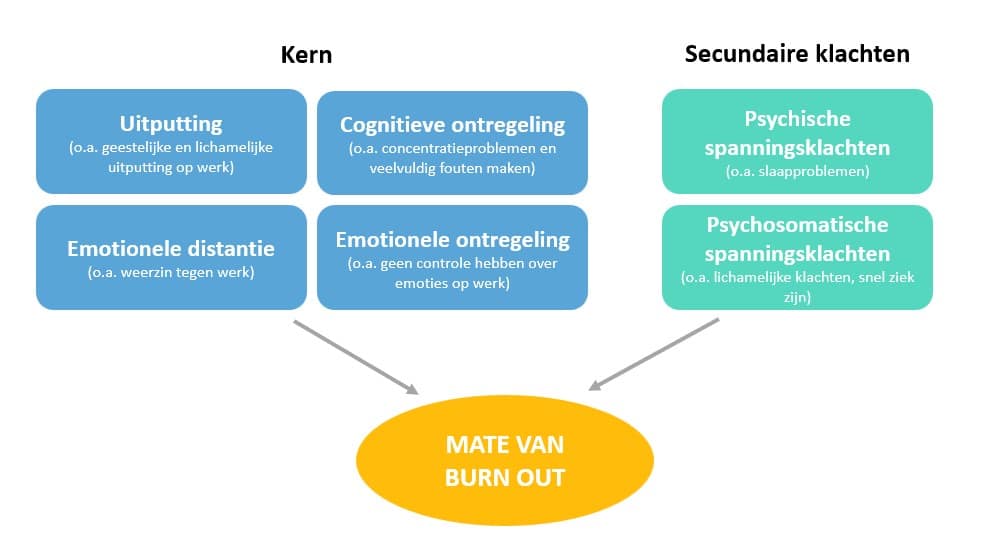
Burnout manifests itself in different aspects (see figure above). Feeddex has validated models for early detection of the risk of burnout. Would you like to know how high the risk of burnout is in your organization and which department/branch/business unit has the highest risk so that you can take countermeasures? Then contact our Client Service Manager: Claire Schmitz. Claire will gladly advise your organization on what model is most suitable in your situation.

World Health Organization (WHO) developed a survey of just five questions focused on subjective quality of life based on positive mood, vital health and interests: the WHO-5 survey. We call it the Happiness meter. It is not a full diagnostic tool, but a low-threshold "early indicator.